







South Africa Returns Stolen Zimbabwe Artifacts
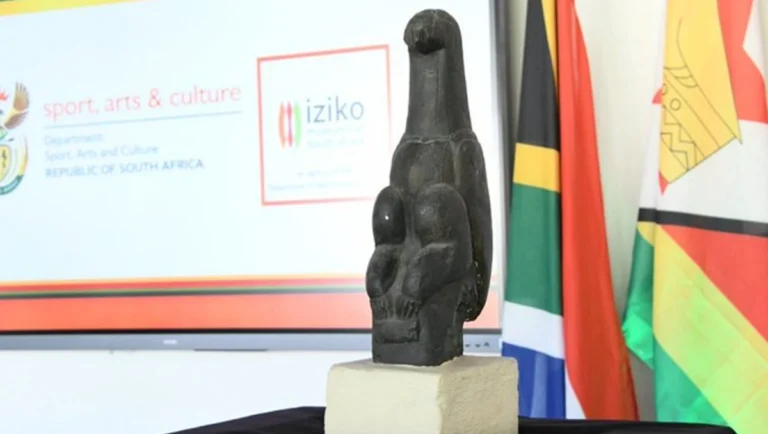
Zimbabwe sacred bird Chapungu. X/ @sputnik_afrique
April 15, 2026 Hour: 7:37 am
🔗 Comparte este artículo
Sacred bird sculpture is repatriated ahead of Independence Day commemoration.
South Africa has returned to Zimbabwe ancestral human remains and a stone carving of the sacred bird that represents its national emblem, stolen more than a century ago during the colonial era.
Zimbabwean President Emmerson Mnangagwa is expected to receive the cultural artifacts at a ceremony on Wednesday.
RELATED:
European Union Extends Arms Embargo Against Zimbabwe
The South African government returned the items Tuesday, highlighting the value of the so-called “Zimbabwe Bird” (Chapungu), a work of national importance that is a “sacred symbol of a people, of their spirituality and their sovereignty,” the South African Culture Ministry said.
“The history of the Zimbabwe Bird has been a story of pride, identity, and painful separation. Carved centuries ago from a single block of stone in the ancient city of Great Zimbabwe, these magnificent sculptures were guardians of a powerful African civilization that flourished between the 11th and 15th centuries,” it added.
In the late 19th century, at the height of colonial looting, several of these birds were taken from Zimbabwe. After Zimbabwe’s independence in 1980, many of the birds were returned through diplomacy and international cooperation.
Nearly 140 years after the first was taken and sold to British magnate Cecil Rhodes, founder of Rhodesia (a territory that encompassed Zimbabwe and Zambia), that same statue — the last and possibly the most important of the eight stolen — is finally beginning its journey home.
“When something sacred is taken from a people, part of their history is lost. The return of these treasures means restoring that history, restoring pride and restoring dignity,” said Culture Minister Gayton McKenzie.
Great Zimbabwe is a medieval city located in southeastern Zimbabwe that served as the capital of the Kingdom of Zimbabwe between the 11th and 15th centuries and is a World Heritage site of the United Nations Educational, Scientific and Cultural Organization (UNESCO).
In March, descendants of anti-colonial fighters executed in Zimbabwe by British forces called on the United Kingdom to return their remains, which were taken as trophies to institutions in the European country, so they can be given a dignified burial.
These demands have intensified as the country prepares to celebrate Independence Day on April 18, marking the 46th anniversary of the end of British colonial rule in 1980.
teleSUR/ JF
Source: EFE